Thursday, December 8, 2011

Candidate Debates

Bad luck, gentlemen.
For the purposes of our class, we are down to 5 candidates. My apologies to Messers Santorum and Johnson, but you're not on the ballot at PSM.


And, despite what his daughters might say, Jon Huntsman is most certainly not back. Or maybe he is? You never know.


Either way, we're down to our Final Five. Group members are listed following each candidate's name.

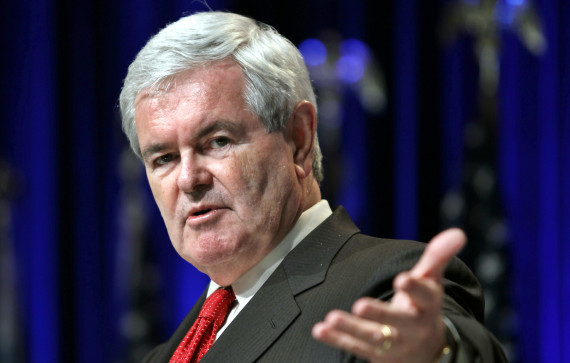
  1. Newt Gingrich (Naaman, Mariah, Delissa, Rukiat)
  2. Mitt Romney (Nia M., Kentrell, Ariana B., Maurice)
  3. Ron Paul (Jonathan, Ariana W., Nia B.)
  4. Rick Perry (Vanecia, Davyion, Vesper, Shaquara)
  5. Michele Bachmann (Toni, Darnell, Njeri)
And one more group:
  1. Moderators (Felicia, Latrionna, Kyronda)
In our final project for the semester, you will prepare for and participate in a mock candidate debate. We will model this very closely after the real life debates that have taken place so far. You can see two nice examples below:
Rubrics and Other Documents
Below are all of the documents you will use in this project:
Candidate Groups
Rationale: In order to effectively argue the position(s) of your assigned candidate, you will complete a uniquely formatted position paper. Your paper should be approximately 3 FULL – 3 ½ pages in length, typed, double-spaced, 12 point font, and will be formatted EXACTLY as described below. You will include each of the headings shown in your paper.

You will need to attach a (minimum) 4-source works cited page to your paper. All sources should be cited following MLA format.

Candidate Position Identification Paper
50 POINT PROJECT GRADE

Candidate biographical information: Here you will type a short biography of your candidate. Where did he come from, what was his life like before he entered politics, how did he become a senator, what political party he is part of, etc.

Candidate Platform: Here you will completely describe the candidate’s beliefs. Explain whether or not she typically falls into step with the rest of her party. Describe the voting bloc she appeals to the most – who got her elected? What issues are nearest and dearest to her heart?

Chosen Debatable Issues: Here you will explain the three issues your candidate will focus on in the debate: the economy, national security/defense, and domestic/social issues. Try to place the things your candidate cares most about under these three areas.

Economic Argument: Completely describe the issue at hand, then give a detailed explanation of your candidate’s stance on the issue. Include key information, quotes, facts and figures, and so on.

Economic Counter-Argument: Once you’ve outlined your position on the issue, detail the counterarguments as proposed by your opponents. Finally, support your position by attempting to poke holes in this argument.

National Security/Defense Argument: Completely describe the issue at hand, then give a detailed explanation of your candidate’s stance on the issue. Include key information, quotes, facts and figures, and so on.

National Security/Defense Counter-Argument: Once you’ve outlined your position on the issue, detail the counterarguments as proposed by your opponents. Finally, support your position by attempting to poke holes in this argument.

Domestic/Social Issues Argument: Completely describe the issue at hand, then give a detailed explanation of your candidate’s stance on the issue. Include key information, quotes, facts and figures, and so on.

Domestic/Social Issues Counter-Argument: Once you’ve outlined your position on the issue, detail the counterarguments as proposed by your opponents. Finally, support your position by attempting to poke holes in this argument.

Closing Statement: Wrap up your paper by stating in specific terms why you are a best choice to be the Republican nominee for president. Cite details which support your argument and close with something that will make your audience remember you.


Grading:

Examine the Candidate Position Paper Rubric. This will show you exactly how I will grade your paper and works cited page.

Moderator Group
Rationale: In order to effectively run the 40-minute debate between our candidates, you will complete a uniquely formatted paper. Your paper should be approximately 3 FULL – 3 ½ pages in length, typed, double-spaced, 12 point font, and will be formatted EXACTLY as described below. You will include each of the headings shown in your paper.

You will need to attach a (minimum) 4-source works cited page to your paper. All sources should be cited following MLA format.

Moderator Paper
50 POINT PROJECT GRADE

Opening Remarks: Open your paper by welcoming everyone. Introduce the location and sponsors for the debate, explain why we have a need for this meeting, provide any necessary background information on issues they will discuss, and describe the format the debate will take.

Candidate Introduction: Here you will type a short introduction for each candidate. Include their party, current position, and any information relevant to the race.


Chosen Debatable Issues: Here you will explain the three issues we will focus on in the debate: the economynational security/defense, and domestic/social issues.

Issue 1: The Economy. Summarize the issues you will ask the candidates to focus on in the debate.

  • Issue 1 Question(s): For each issue/topic, you will need to compose a minimum of 3-4 questions to ask the candidates. You will not share your questions with the candidates prior to the debate, but will make sure to notify them of the general topic you will cover in each question. Although you have three vague, assigned topics to cover, you must decide how you will focus the candidates on the issues.
  • Issue 1 Question(s) Rationale: Explain your reason for asking each question. You should have a general idea of what each candidate’s answer will be.
Issue 2: National Security/Defense: Follow the same format from Issue 1.
Issue 3: Domestic/Social Issues: Follow the same format from Issue 1.

Closing Statement: Close your paper by stating the procedure you will follow at the end of the debate.


Grading:
Examine the rubric to see exactly how you will be graded.

Thursday, December 1, 2011

Handicapping the Republican Primaries

Newt For the Win?
For homework this weekend, choose at least one of the articles listed in this post. Complete the following on loose leaf:

  1. Write a 1 paragraph summary. Include the article's main idea and any key points. (5 points)
  2. Explain what you learned from reading the article. (5 points)
  3. How does this article help you become more informed as a voter? (5 points)

The Articles
Here's an article from my favorite political blog, FiveThirtyEight, which predicts what might happen if a candidate such as Newt Gingrich wins some of the early primaries.

This article covers Mitt Romney's personal reinvention.

This article analyzes the apparent reluctance of Republican voters to choose Romney as their candidate.

Along the same lines, here's Gingrich as the "Anti-Romney."

And Gingrich breaking with his party on immigration issues.

Here's an editorial focusing on Cain and the lure of "outsider candidates."

This NY Times editorial suggests that the Republicans can learn a lot from Democratic strategy during the 1992 election.

This article focuses on the Democratic strategy regarding the Payroll Tax Holiday debate.

Finally, here's the Democrats' response to Romney's first national campaign ad.

As a bonus, hot off the presses, here's Romney's first ad for the Iowa primary.

Wednesday, November 30, 2011

Election Strategy

A two-term president?
Today we will focus on the overall strategies chosen by the Republican and Democratic parties in the 2012 presidential campaigns. You will complete today's assignment by yourself. You may:
  • Type and print the assignment
  • Write it on loose leaf paper
Part 1: The GOP (10 points)
First, read the article "G.O.P’s 2012 Strategy Puts Focus on Timing". It is a little old, but it will help us discuss some key Republican strategies. Use it to respond to the questions below.


  1. According to the post, in what ways is the next presidential race comparable with the 1996 race? In what ways will this race be different?
  2. What are the two main strategies that Republicans are using to level the playing field in the campaign against President Obama? Do you think that these two strategies will work? Why or why not?
  3. Why are Republicans slowing down their potential candidates’ entry into the race? What are the benefits of this approach? What are the drawbacks?
  4. Why are Republicans slowing down the anointment of a nominee? What are the benefits of this approach? What are the drawbacks?
  5. If you were a campaign strategist for the Democratic Party, what would you do to counter these Republican strategies? Why?
Part 2: The Democrats (10 points)
When you're done with the first article, read"Obama begins re-election facing new political challenges". Use the article to answer the questions below:
  1. What types of messages about his candidacy is President Obama sending his supporters at the kickoff of his re-election campaign? Why?
  2. What are some good signs for President Obama at this early stage in the campaign?
  3. If you were President Obama, what would you be concerned about?
  4. What decisions did President Obama make during his presidency that might help or hurt him now that he is running for re-election?
  5. If you were a campaign strategist for a Republican candidate, what would you do to counter Mr. Obama’s approach to his re-election campaign?
Part 3: YOUR Strategy (10 points)
Now, go back to your partner(s) for your Republican candidate. Your goal, clearly, is to discredit President Obama and to win election (for yourself and your party). Based on all of the research you have done so far, as well as today's articles, create a 10-step list that will enable you to take America's top job.

Monday, November 21, 2011

Back to the Ads

Today and tomorrow, we will return to your attack ad projects. We have access to Windows Live Movie Maker in the computer lab now, and will be able to do that.

You must:
  • Save your ads research to the Y:\Ramin American Politics\Attack Ads Research folder
  • Save your ad to the Y:\Ramin American Politic\Attack Ads folder
First: Check to make sure that your information is up to date! A couple of weeks have passed since we worked on this. Lots of things have changed in the time that passed.

Thursday, November 17, 2011

Occupy Wall Street Quick Summary

Still don't quite understand the goals of the Occupy Wall Street movement? Check out this brief video from CNN. It's a little silly, but it gets the point across.

Tuesday, November 15, 2011

Presentation Preparation

Today's class runs from 8:50 - 9:26.
During this period, you must:
  • Make sure each group member's name is on every document you are turning in
  • Save your bibliography to the "Y:\Ramin American Politics\EPA Bibliographies" folder
  • Save your brief the the Y:\Ramin American Politics\EPA Briefs" folder
  • Print out a copy of your brief and your bibliography. Staple everything together and turn it in to me
  • Print out copies of the brief for each member of the group.This way the presenters will each have one. In addition, the people not presenting will have one to follow along with.
  • Outline your presentation
Your presentation before the Pollution Control Board is a 50 point project grade. It must include each of the following elements:
  • When called on to present, you will stand and approach the podium.
  • Introduce yourself and your organization. "My name is _______________, and I am here on behalf of the _____________________________."
  • Introduce your colleagues, even those who will not be presenting. Gesture to each in turn. Students not presenting: when your name is called, stand, nod to the panel, and return to your seat.
  • An introduction. Explain why you are here today. Give an overview of the 2 (or more) issues your group will focus on and any important facts you will talk about more in depth later in the presentation. State whether you will show that Chicago Clean Energy, Inc. should be able to build its proposed coal gasification plant or not (or whether you should get the land instead, Solar Service, Inc.!).
  • First issue. Introduce the point, then give your supporting facts. Think: how can I persuade the panel to believe that my position here is more correct than the other groups'?
  • Second issue. Again, introduce the point, then give your supporting facts.
  • Summary and Conclusion. Summarize the points you made, and remind your audience of any particularly important facts. Conclude by strongly re-stating your opinion. Include your organization's name at some point.
  • Be prepared to answer questions!
Break your presentation up between the two speakers. I recommend alternating between the two of you.
  • First speaker approaches the podium, introduces group, introduces position, sits.
  • Second speaker rises, introduces first issue, explains first issue, answers any questions, sits.
  • First speaker rises, introduces second issue, explains second issue, answers any questions, sits.
  • Second speaker rises, delivers conclusion, responds to any questions, thanks panel, sits.
All speakers will sit in the front row of the chapel. All other group members will sit in the audience area.

During the presentations, group members who are not speaking will have evaluation sheets to fill out. These will help you predict your success/lack of success/etc.

Any group members not preparing the outline in class today should prepare a list of at least six critical questions. When it is time to practice, watch your presenters to see if they address these questions. If not, ask them. Help them prepare strong, fact-based responses.

Friday, November 11, 2011

Pollution Control Board Briefs

An example of a coal gasification plant.
First -- no test on Monday. We will need to take one later in the week, likely Friday.

The Leucadia/Chicago Clean Energy, Inc. Issue
Leucadia National Corporation is a holding company that does business in many different fields. One of its focuses is on energy production. Now the company would like to open a coal gasification plant on Chicago's southeast side.

You represent one of 5 stakeholder groups:
  • Leucadia National Corporation
  • Illinois Coal Association
  • Sierra Club
  • Allergy and Asthma Network/Mothers of Asthmatics
  • Solar Service, Inc.
In addition to Leucadia's real life bid, we are adding a little twist -- Solar Service, Inc. would like to purchase the same land to open a solar panel production factory.

Your group will need to produce a brief in support of or in opposition to Leucadia's bid.

The brief must be 3-4 pages in length PLUS a title page. An effective brief will likely be closer to 4 pages plus the title page.

This is a group project grade, and it is worth 80 points based on this rubric. You will also need to complete a 25 point works cited page, based on this rubric. Finally, your group will receive an additional 50 point grade  for your presentation at the Illinois Pollution Control Board (yes -- this is a real group) hearing on Wednesday.

This brief, prepared on behalf of the Sierra Club, is way too long for our purposes, but it gives an excellent example of the format you should follow.

If you cannot open the pdf, this link should work.

First, we will need to decide on a list of issues to address.
  • Choose one member to represent your group for today only.
  • The rest of the group members should go to this page produced by Chicago Clean Energy, Inc., a subsidiary of Leucadia.
Representatives will meet with members of other "friendly" groups to plan your side's attack. Other group members should watch at least 2 of the videos on the Chicago Clean Energy page in order to get a better idea of exactly what the issue is.

Research
First, the slides presented by Ms. Furey and the EPA speakers on Wednesday and Thursday are available for you to view in the "Y:\Ramin American Politics\EPA Slide Shows" folder.

Once you have the two issues your group will focus on in its brief, you will need to find at least five sources to use in your project. Include these in a minimum 5-source bibliography. 

These sources could be:
  • Information from your organization's website
  • News sources
  • Academic papers
  • Federal/State evaluations of the site
  • EPA information on coal gasification and sequestration
  • Etc., etc.
Make sure each fits with the points you plan to make!

Cite each source using proper MLA format, as demonstrated on the Purdue OWL website. Each group will turn in one bibliography.

For the sake of time, I will not require you to annotate your sources. However, take notes on them as you go through them -- this will make sure that you are including accurate information in your brief. I will not check your notes, but the quality of the notes you take will be evident in your final brief and in your presentation to the pollution control board.

The Brief
Follow the example Sierra Club brief to format your information correctly. You will need to:
  • Mirror the format of the Sierra Club's title page
  • Include a header on each page similar to the one on the example brief
  • Do NOT include a table of contents (unless you really want to -- this will not count toward your page limit)
  • Include an introduction your group, the reasons for your interest in the proposed Leucadia site, and the  issues you will adress
  • Your group's evaluation of the proposed site and its impact on your position (environmental hazard? Job creator? Etc.?)
  • Your analysis of related issues
  • A defense of your position
  • An refutation of the opposition's position
Remember -- hopefully you'll be presenting
for Governor Quinn!
The brief, remember, is just the beginning. You will need to make a reasonable, impassioned argument before the Pollution Control Board. Even now, you should be thinking of your two speakers and what they will say.

You need to convince the board to vote for your position -- whether or not to approve Leucadia's proposed coal gasification project on Chicago's SE side.

This is all due at the end of Monday's class. Make sure you divide anything that you will be accomplishing this weekend.